
Why Menopause Anxiety Is Rising Worldwide

Written by the Editorial Team.
Why are anxiety disorders climbing among women in the menopause transition across every region of the world? The editorial team looks at the global data, the nervous system underneath it, and what a calmer passage requires.
Anxiety in midlife often arrives without an obvious story. A woman who has presented to boards, raised children, and managed crises finds herself lying awake with a racing heart over nothing she can name. She is in large company, and the company is growing.
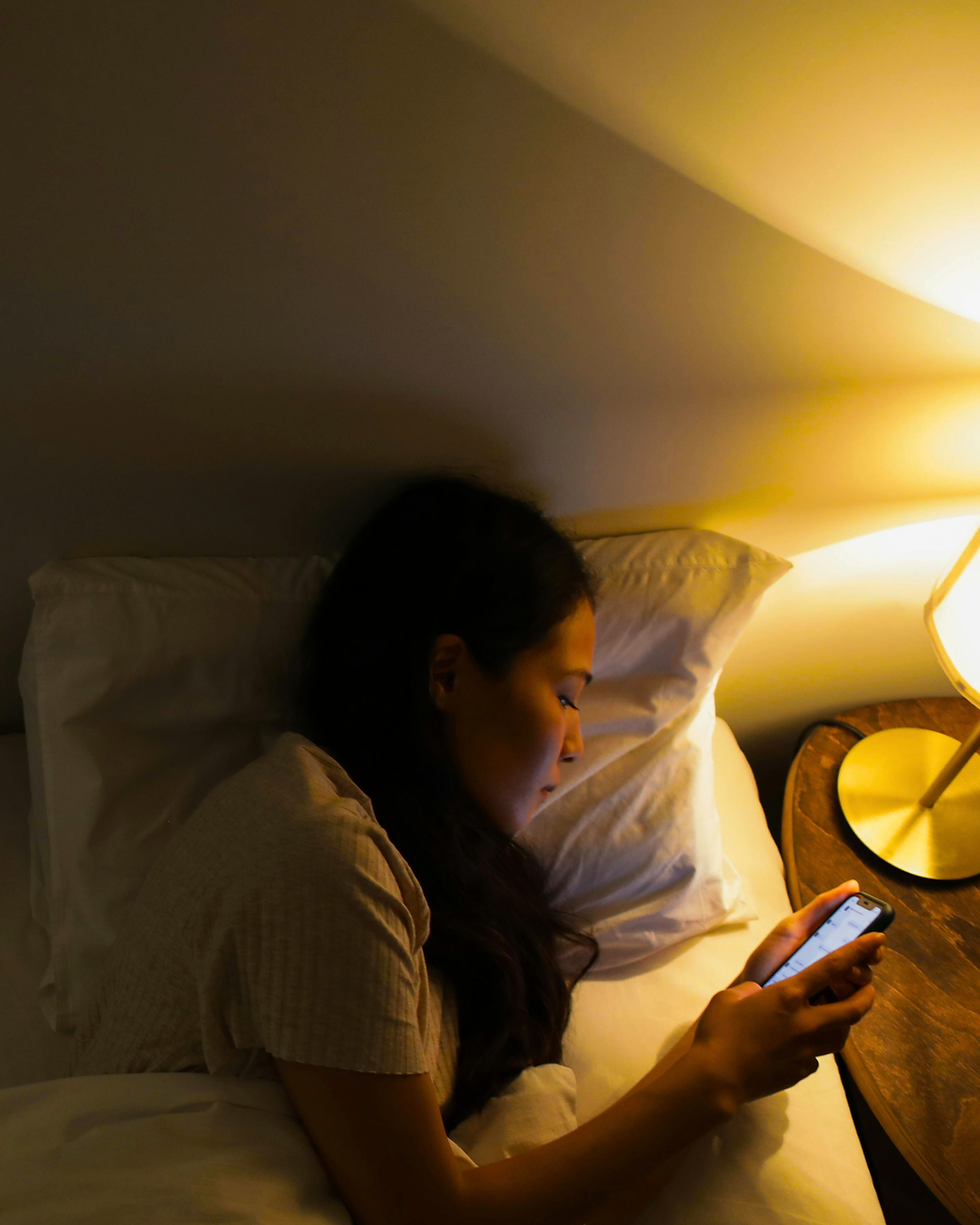
By 2035, the global burden of perimenopausal anxiety is projected to rise by more than 40 percent.
The Global Picture
In 2025, researchers led by Ying Zhang published an analysis in BMC Women's Health drawing on the Global Burden of Disease database, the most comprehensive record of world health available. They examined anxiety disorders among perimenopausal women across three decades, from 1990 to 2021, and projected the trend forward.
The findings were sobering. The burden of anxiety disorders in perimenopausal women, measured in disability-adjusted life years, rose steadily across the study period. The projection to 2035 showed a further increase of just over 40 percent compared with 2021 levels. Anxiety in this transition is a growing global pattern that crosses borders, income levels, and health systems.
Why This Transition, Why Now
The physiological part of the answer sits in the relationship between oestrogen and the body's threat-detection systems. Fluctuating hormones affect the brain circuits that decide what counts as danger, which is why perimenopausal anxiety so often feels free-floating: the alarm is more sensitive, so ordinary life trips it.
The work of Dr. Stephen Porges, the neuroscientist behind polyvagal theory, offers a useful frame. Porges describes how the autonomic nervous system continuously scans for safety and threat beneath conscious awareness, a process he calls neuroception.
When the biology that regulates this system is in flux, the scanning tilts toward threat. The anxious perimenopausal woman is experiencing a nervous system whose sense of safety has been temporarily recalibrated.
The modern part of the answer is load.
Women now pass through this transition while carrying peak professional responsibility, financial pressure, dependent parents and children, and a phone that never stops. A sensitised alarm system in an over-stimulating world is a reliable recipe for the numbers the global data shows.
Anxiety Is Information
Free-floating anxiety in this decade should be read the way a good clinician reads any signal: as information about a system under strain.
Sometimes the primary driver is hormonal, and treating the hormones settles the alarm. Sometimes the driver is a life built without margins, and no prescription substitutes for restoring them.
Very often it is both.
This reframing matters because anxious high-achievers tend to respond to anxiety with self-criticism, treating the symptom as a personal failure of composure.
The evidence supports a kinder and more accurate reading: a predictable, physiologically grounded response to a demanding transition, one that responds to treatment and to changes in how life is loaded.
Settling the System
The path back to a settled nervous system runs through both medicine and daily architecture. Hormonal treatment helps many women whose anxiety tracks with the transition.
Cognitive behavioural therapy carries strong evidence for menopause-related anxiety and is recommended in UK national guidance.
Alongside these sit the practices Porges' framework points toward: slow exhaling breath, time in genuinely safe company, and regular states of rest in which the body learns that the alarm can stand down.
None of this requires a woman to withdraw from her responsibilities. It requires her to treat her nervous system as infrastructure, maintained deliberately, because everything else she does runs on it.
The global numbers describe a generation of women passing through a demanding transition under historically heavy load. They also describe a problem with known, effective responses.
Anxiety in this passage is common. Untreated is optional.
Ready to understand your current recovery needs more precisely?
The Free Regeneration Assessment at Calmfidence World maps where you are now and what your body may need most.
What's next
Continue with Recognising Burnout Signs in Midlife Women, where the editorial team maps the depletion patterns that so often travel with midlife anxiety.
Then explore our Women's Health series for more evidence-based perspectives on this decade.
For the wider picture on energy, sleep and hormones after 40, explore our Lifestyle Medicine for Women 40+ resource.
FAQ
Is anxiety a normal part of perimenopause?
It is common, which is different from being something to endure. Global health data shows anxiety disorders among perimenopausal women rising worldwide, and fluctuating oestrogen directly affects the brain systems that regulate threat detection. Common and treatable can both be true.
Practical step: note when anxiety spikes relative to your cycle for one month; a pattern is useful clinical evidence.
Why does my anxiety have no obvious cause?
Because the sensitivity of the alarm system itself has shifted. When hormones that help regulate the nervous system fluctuate, ordinary situations can trigger a threat response. The anxiety is real, and its cause is physiological as much as situational.
Practical step: when anxiety rises without a clear trigger, lengthen your exhale for two minutes; a slow out-breath signals safety to the nervous system.
Does hormone therapy help with menopause anxiety?
For many women whose anxiety tracks with the transition, yes. Others do well with cognitive behavioural therapy, which is recommended in UK national guidance for menopause-related anxiety, or with a combination. The right answer depends on your history and belongs in a conversation with a menopause-informed clinician.
Practical step: ask your clinician specifically about the evidence for both hormonal and non-hormonal options for anxiety.
Can lifestyle changes really make a difference to anxiety at this stage?
Yes, as part of the picture. Consistent sleep, regular movement, reduced alcohol, and deliberate recovery time all lower the baseline arousal of the nervous system, which raises the threshold at which anxiety triggers. They work best alongside, and never instead of, proper medical assessment when symptoms are significant.
Practical step: protect a daily fifteen-minute window with no inputs, no phone, no tasks, and treat it as nervous system maintenance.
When should I seek medical advice?
When anxiety interferes with sleep, work, relationships, or your sense of yourself. Seek help promptly if you experience panic attacks, persistent dread, or thoughts of self-harm. Effective treatment exists and no level of daily anxiety should be accepted as the price of midlife.
Practical step: book an appointment this week and describe the anxiety in concrete terms: when, how often, and what it stops you doing.
Curious to explore more?
Sign up and join the Calmfidence Circle, high-achieving women and midlife leaders exploring emotional health, sustainable performance, and regeneration.
Calmfidence World. From depletion to Calm Power.


