
What Traditional Chinese Medicine Understood About Water Long Before Wellness Culture Caught Up

Updated: Sep 4
Written by the Editorial Team.
What if the exhaustion you are calling burnout has an older name in a medical tradition thousands of years old? The editorial team explores what Traditional Chinese Medicine has always said about water, and why midlife is exactly when it matters most.
Western medicine calls it depletion. Traditional Chinese Medicine gave it a name and an element centuries earlier.
Long before wellness culture discovered the sea, an entire medical system had already built water into the architecture of how the body is understood.
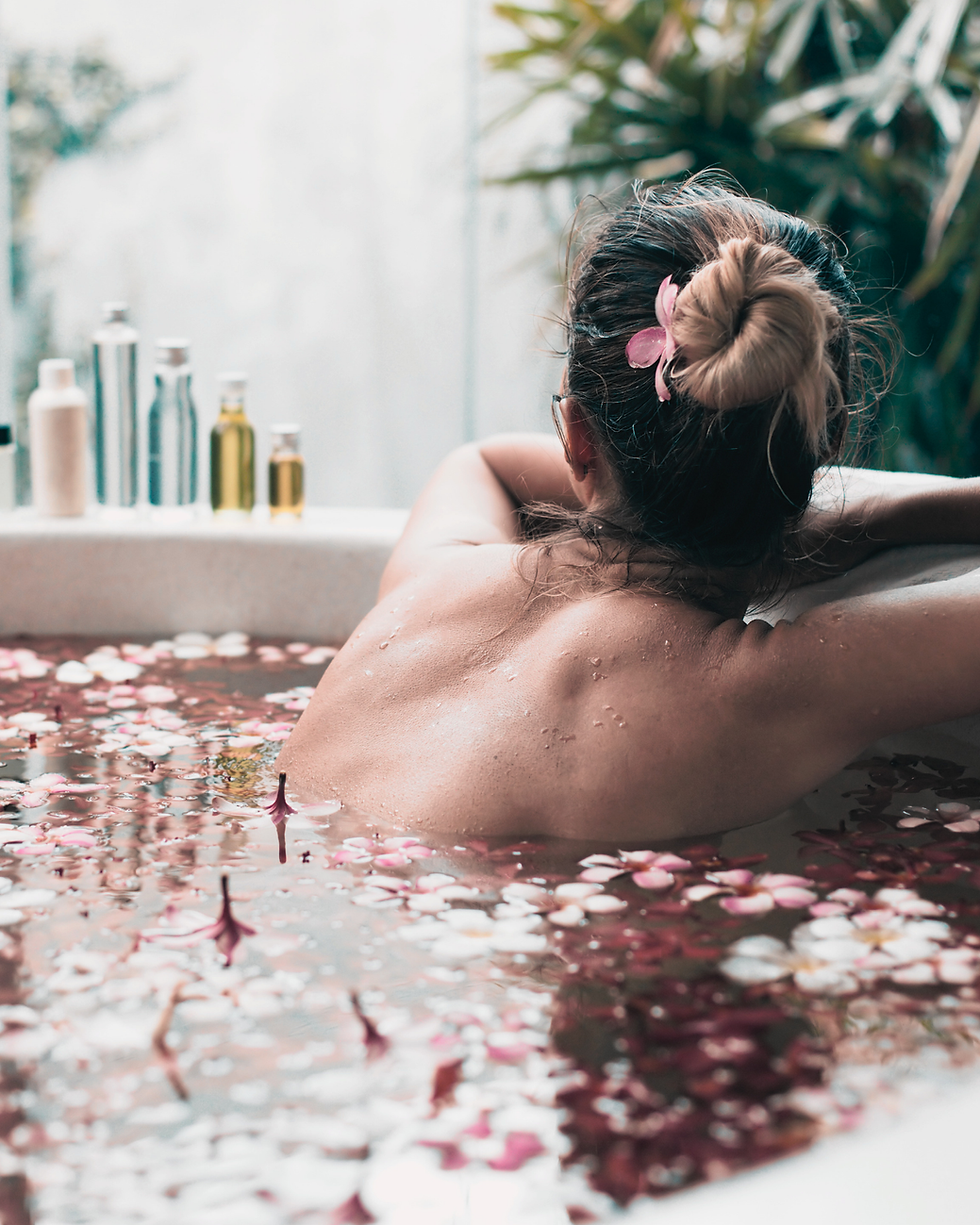
The water element, briefly explained
In Traditional Chinese Medicine, the body is mapped through five elements, wood, fire, earth, metal and water, each linked to specific organs and to a particular quality of vitality.
Water governs the kidneys, which in this tradition hold what practitioners describe as the body's deepest reserve of energy, its Jing.
Ted Kaptchuk's classic text on the subject, The Web That Has No Weaver, describes this reserve as finite and slow to rebuild once overspent, a description that will feel uncomfortably familiar to any woman who has run herself past empty for years and wondered why rest no longer seems to refill her the way it once did.
Where this meets midlife directly
Midlife hormonal transition is, in TCM terms, closely tied to a natural decline in kidney energy.
Practitioners do not treat this as failure. They treat it as a signal to actively replenish rather than continue drawing down, which is a markedly different posture from the Western instinct to push through symptoms until they resolve on their own.
A real programme built on this fusion
At Lefay Lago di Garda, the resort's SPA Method was created specifically around the fusion of TCM and Western medicine, treating stress as a root cause of imbalance and using pulse, skin tone and voice assessment alongside modern diagnostics.
Guests receive TCM consultations, meridian-based treatments, and a signature salt-water pool ritual, water again positioned at the centre of the recovery process, not as decoration around it.
What this means without booking a retreat
You do not need a TCM consultation to borrow the underlying logic. Treating rest as active replenishment, rather than passive time off between periods of output, is the practical takeaway.
Water, whether a bath, a swim, or simply drinking enough of it, sits at the centre of that logic in a tradition that has been testing it for a very long time.
Ready to understand your current recovery needs more precisely?
The Free Calm Power Assessment at Calmfidence World maps where you are now and what your body may need most.
What's next
Continue with The Cold Plunge Your Grandmother Would Have Called Something Else, a related read on this topic.
Explore our TCM collection for more evidence-based perspectives.
For the wider picture on energy, sleep and hormones after 40, explore our Lifestyle Medicine for Women 40+ resource.
FAQ
Do I need to believe in TCM concepts for this to be useful?
No. The practical takeaway, treating rest as active replenishment rather than passive downtime, stands on its own regardless of whether the underlying framework resonates with you.
Practical step: this week, schedule one period of rest as deliberately as you would schedule a meeting, rather than waiting for a gap to appear.
Is TCM safe to combine with conventional medical care?
Reputable TCM practitioners generally work alongside, not instead of, conventional medicine, particularly for anything involving hormones, blood pressure or existing diagnoses.
Practical step: tell any TCM practitioner about current medications or conditions before treatment begins.
Who should be cautious with acupuncture or TCM treatments?
Anyone who is pregnant, on blood thinners, or has a bleeding disorder should disclose this before any needle-based treatment and confirm suitability with both practitioners involved.
Practical step: bring a current medication list to your first TCM consultation.
Curious to explore more?
Sign up and join the Calmfidence Circle, high-achieving women and midlife leaders exploring emotional health, sustainable performance, and regeneration.
Calmfidence World. From depletion to Calm Power.


