
The Leak Nobody Talks About, and the Workout That Actually Helps

Updated: Sep 20
Written by the Editorial Team.
A sneeze, a jump, a laugh that catches you off guard. Millions of women manage this quietly and rarely mention it, even to a doctor. The editorial team looks at the research behind Barre's unexpected role in pelvic floor health, and what it can and cannot fix.
It is one of the most common physical changes women experience in midlife and one of the least discussed, at work, at the gym, even at a routine doctor's appointment.
Urinary leakage during a laugh, a sneeze, a jump or a run affects a substantial proportion of women by their forties and fifties, whether or not childbirth was ever part of the story, and most women simply adapt around it rather than raising it as a treatable problem.
Twenty-five women, ten Barre classes, symptoms cut by roughly half. A gym class, not a clinic.
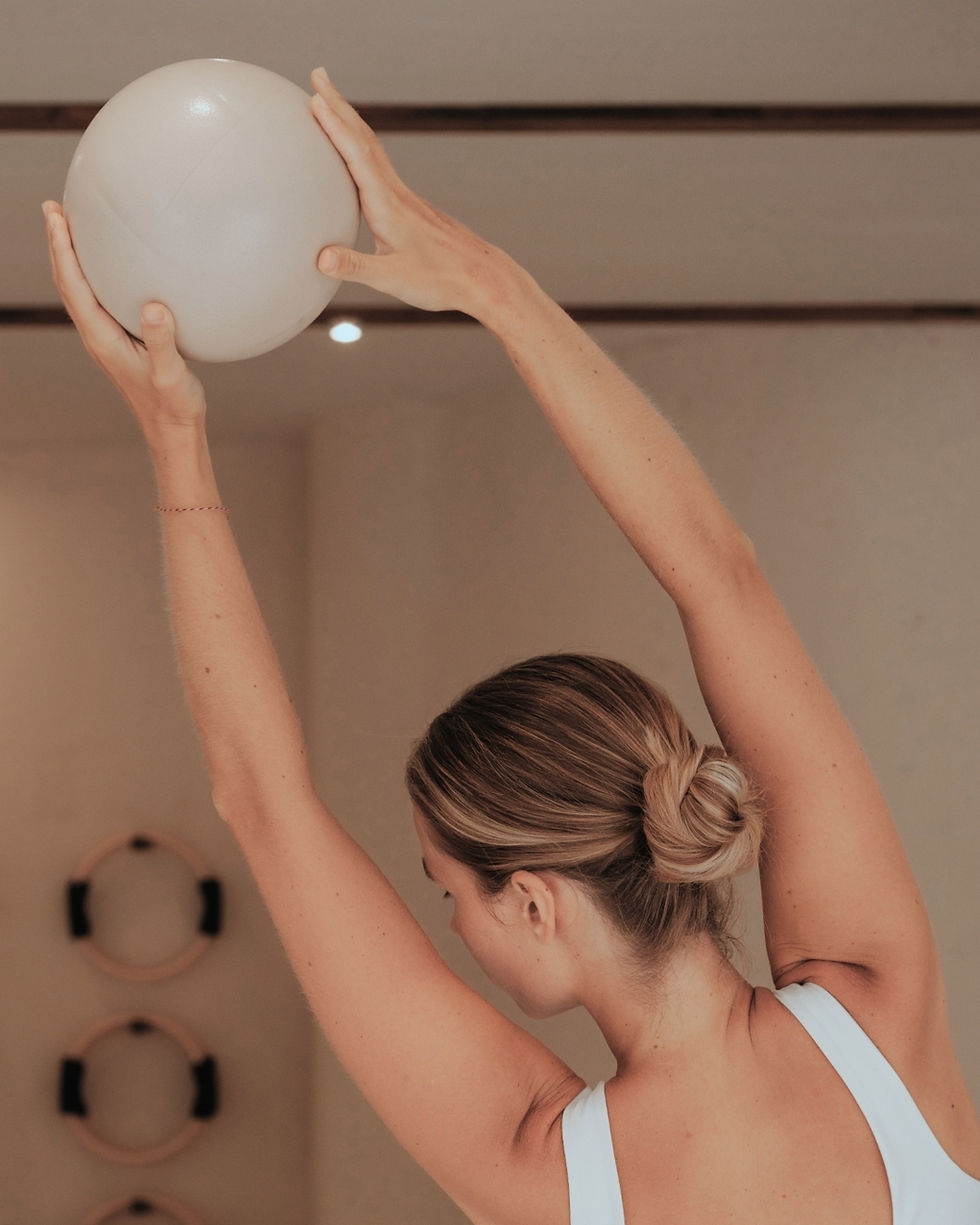
That is a genuinely useful, low-barrier finding, and it deserves to be treated with the same honesty as any other piece of evidence in this space: real, promising, and not a substitute for specialist care when the underlying issue calls for it.
The study behind the claim
In 2023, Rebeccah Briskin and Ali Luck, a urogynecologist at Henry Ford Health, followed 25 new Pure Barre clients with mild to moderate urinary incontinence through ten classes over two months.
Using three validated questionnaires, they found statistically significant improvement across every measured domain: the Michigan Incontinence Symptoms Index severity score fell from a median of 13 to 7, urgency incontinence scores nearly halved, and stress incontinence scores fell by more than half.
Luck described the improvement in everyday terms: symptoms decreased by roughly 50 per cent over the study period.
The researchers frame Pure Barre as a plausible, enjoyable alternative for women who struggle with the compliance demands of formal pelvic floor physical therapy, not as a replacement for it in more significant cases.
Why Barre's structure suits this specific muscle group
Barre's small, held pulses and sustained isometric positions closely resemble the repeated, controlled contractions a pelvic floor physiotherapist prescribes as home exercises, sometimes called Kegels when applied specifically to the pelvic floor.
The core and inner-thigh engagement Barre demands throughout a class recruits the pelvic floor indirectly and repeatedly, which may explain why the format produced measurable change over a relatively short, ten-class programme.
Where Yogilates and Pilates add a related benefit
Pilates was developed around precise control of the deep core and pelvic stabilisers specifically, rather than the superficial abdominal muscles a typical gym class targets, which gives it a related, well-established connection to pelvic floor function.
Yogilates inherits this benefit through its Pilates component, layered alongside the breath work Yoga contributes, which some pelvic floor physiotherapists use deliberately to coordinate breath with pelvic floor engagement.
Stress versus urgency, and which responds best
Stress incontinence, leakage triggered by a cough, sneeze, laugh or jump, responds most directly to pelvic floor strengthening, since weak or poorly coordinated pelvic floor muscles are its primary mechanism.
Urgency incontinence, a sudden, hard-to-control need to urinate, has a more complex set of contributing factors, including bladder behaviour and nervous system regulation, so while the Briskin and Luck study found improvement in both categories, the mechanism for urgency symptoms is likely broader than pelvic floor strength alone.
What Barre does not replace
Women with pelvic organ prolapse, more significant incontinence, or symptoms that have not responded to general exercise need individualised assessment from a pelvic health physiotherapist, who can identify whether the pelvic floor is actually weak or, in some cases, too tense to engage safely with generic strengthening work, a distinction a group fitness class cannot make.
Barre is a genuinely useful, evidence-supported first step for mild to moderate symptoms. It is not a diagnostic tool, and it should not delay a proper assessment for anyone whose symptoms are significant or worsening.
A caution worth naming
Some Barre-adjacent formats include small jumps or plyometric bursts, which can aggravate rather than help stress incontinence symptoms in the short term, since impact places sudden downward pressure on an already-compromised pelvic floor.
A woman managing symptoms should look specifically for a low-impact Barre format and mention the goal to an instructor, who can typically suggest a grounded alternative to any jumping segment.
What this changes
This is one of the more quietly significant findings in this whole area of research, not because Barre is a miracle fix, but because it gives women a genuinely enjoyable, low-barrier option for a problem most have simply learned to live around in silence.
Ten classes and a measurable, meaningful improvement is a realistic, achievable target rather than an abstract promise.
Naming a symptom most women carry quietly, and finding it has a real, evidence-backed answer, is exactly the kind of steadiness Calm Power is meant to describe.
What's next
For more on this transition and the body's other quiet signals, read What Can Help With Fatigue During Menopause?.
Then explore our Women's Health collection for more on the changes this decade brings.
For the wider picture on energy, sleep and hormones after 40, explore our Lifestyle Medicine for Women 40+ resource.
Ready to understand your current recovery needs more precisely?
The Free Calm Power Assessment at Calmfidence World maps where you are now and what your body may need most.
FAQ
Can exercise actually improve urinary incontinence?
Yes, for many women. A 2023 study found that 25 women with mild to moderate incontinence experienced significant improvement across validated symptom measures after ten Pure Barre classes over two months, with overall symptoms decreasing by roughly half.
Practical step: commit to a set of ten classes before judging whether Barre is helping, since that is the timeframe the study used.
Is Barre safe with pelvic organ prolapse?
Not without individual assessment first. Prolapse changes what is safe and effective for the pelvic floor, and generic strengthening exercises are not always appropriate without a pelvic health physiotherapist's guidance.
Practical step: see a pelvic health physiotherapist for an assessment before starting Barre if you have diagnosed prolapse.
How long until I would notice improvement?
The supporting study measured significant improvement after ten classes over roughly two months, though individual timelines vary and some women notice earlier changes in awareness and control.
Practical step: track your symptoms weekly using a simple diary so gradual improvement is easier to notice than it would be from memory alone.
What about the jumping in some Barre classes?
Jumping and plyometric bursts, found in some higher-intensity Barre formats, can aggravate stress incontinence symptoms in the short term due to sudden impact on the pelvic floor.
Practical step: ask for a low-impact Barre class and request a grounded modification for any jumping segment.
Should I see a pelvic health physiotherapist instead of trying Barre first?
For mild to moderate symptoms, Barre is a reasonable, evidence-supported first step. For significant, worsening, or prolapse-related symptoms, a pelvic health physiotherapist should be the first port of call, since they can distinguish between a weak and an overly tense pelvic floor.
Practical step: if symptoms do not improve after a consistent ten-class trial, book a pelvic health physiotherapy assessment next.
Who should take medical advice about pelvic floor symptoms?
Any woman with pelvic organ prolapse, incontinence that is worsening or significantly affecting daily life, pain with the symptoms, or blood in her urine should see a doctor before starting a self-directed exercise approach.
Practical step: describe your specific symptoms and their frequency clearly to your GP rather than framing it as a general concern.
Curious to explore more?
Sign up and join the Calmfidence Circle, high-achieving women 40+ exploring emotional health, sustainable performance and regeneration.
Calmfidence World. From depletion to Calm Power.


