
Why Your Yoga Practice Started Hurting at 42

Written by the Editorial Team.
Three practitioners built three different methods after the same Yoga class turned on them. The editorial team traces the injuries behind Yogilates and Barre, and why a practice that felt fine at thirty can suddenly ask too much of a changing body.
The same downward dog that felt like nothing at thirty-five can leave a low back sore for three days at forty-two. Nothing about the pose changed. The body holding it did.
Barre and Yogilates were not designed by people who loved Yoga. They were designed by people it had injured.
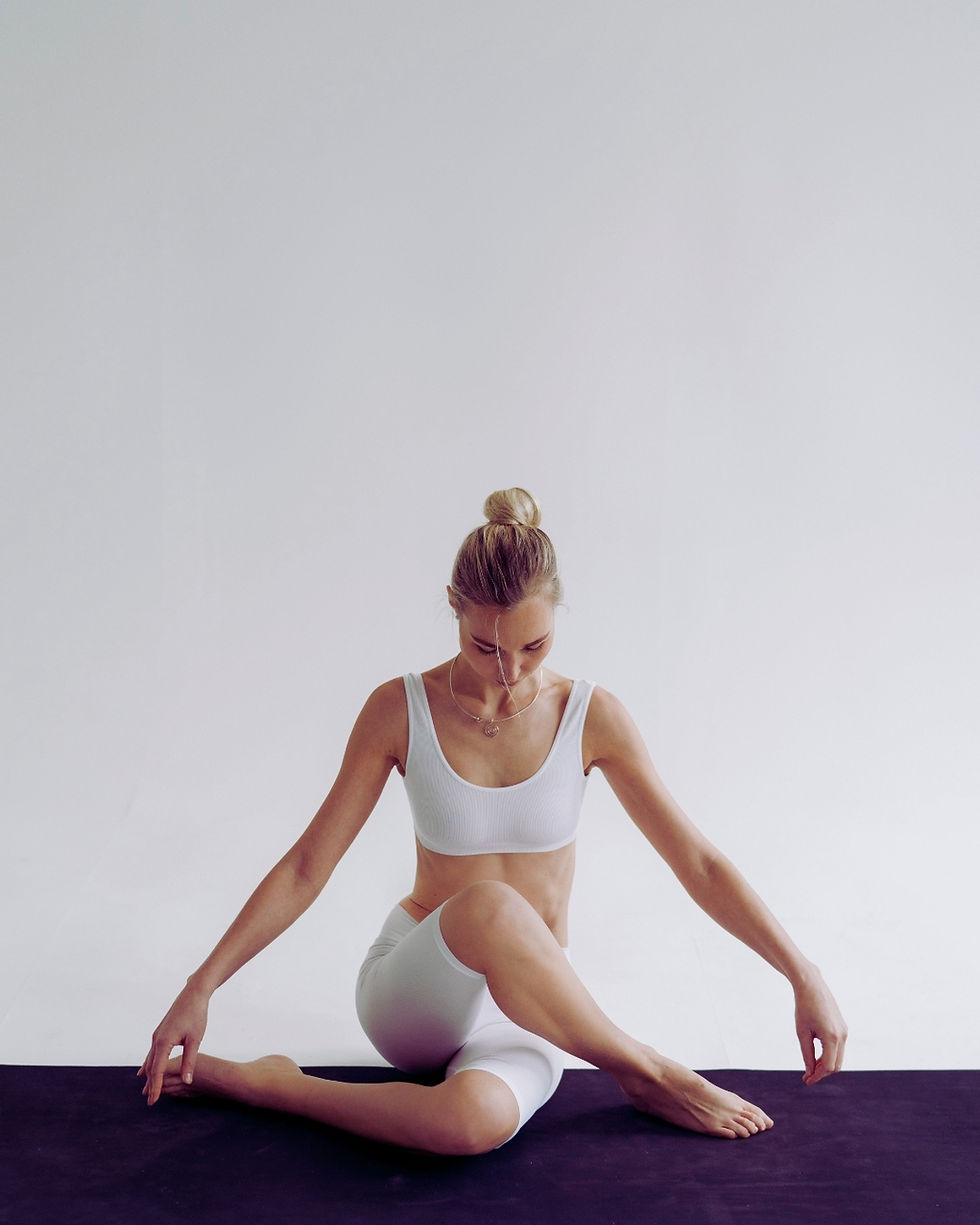
That is not a coincidence, and it is not a criticism of Yoga itself. It is a pattern in the history of exactly the two disciplines built to solve it.
Three practitioners, three injuries, one conclusion
In 1959, dancer Lotte Berk injured her back and worked with an osteopath to design a set of rehabilitative exercises drawn from ballet Barre training, strong enough to stabilise a compromised spine without the impact her body could no longer absorb.
Decades later, Louise Solomon was injured during a beginner Yoga class in Australia, trained fully in Pilates specifically to rehabilitate that injury, then folded the core control she had learned back into her Yoga teaching to create Yogalates.
Fitness professional Jonathan Urla, working independently in the United States, spent years watching the same structural gap play out in students around him, Yoga classes offering flexibility and calm with too little core support, and built Yogilates in 1997 to close it.
Three practitioners, on different continents, in different decades, arrived at the same conclusion from the same direction: flexibility without structural strength eventually breaks something.
What actually changes in a forty-something body
By the early forties, most women are somewhere in the perimenopausal transition, and declining oestrogen changes how connective tissue behaves.
Tendons and ligaments lose some elasticity and repair capacity as oestrogen receptors throughout the musculoskeletal system receive less signal, which is part of the mechanism behind the musculoskeletal syndrome of menopause that orthopaedic researchers formally named in 2024.
A deep hip opener or an unsupported backbend that a twenty-eight-year-old's tissue absorbed without incident asks something different of tissue that has lost some of its give.
This is not a reason to stop moving. It is a reason the specific demands of a practice matter more at forty-two than they did at thirty.
Where classic Yoga asks the most of a changing spine
Deep, unsupported spinal flexion and extension, the kind found in full forward folds, deep backbends and some seated twists, place real demand on the discs and ligaments of the spine.
For a twenty-something practitioner with fully elastic connective tissue, that demand is well within tolerance.
For a woman whose tendon and ligament tissue has started to lose elasticity, the same pose asks more of structures that have less to give, which is one plausible explanation for why familiar poses start producing new aches with no obvious injury attached to them.
What Pilates-based core work adds back in
Both Urla's and Solomon's methods solved this by folding Pilates' precise core stabilisation into a Yoga-based practice.
A trained core does not just look different, it changes how load moves through the spine during a forward fold or a backbend, sharing the work across the deep stabilising muscles rather than asking the spinal ligaments to hold the position largely alone.
That is the mechanical logic behind why a hybrid practice can restore comfort to movements that had started to hurt.
Barre's different answer to the same problem
Barre approaches the same underlying issue from a different angle: rather than adding core control to a flexibility-first practice, it builds strength and stability first, in small, controlled ranges of motion that rarely ask a joint to move beyond a position it can support.
The bar itself does some of the stabilising work a spine or hip might otherwise have to do alone, which is part of why many women find Barre comfortable at exactly the point a familiar Yoga class has started to feel risky.
This does not mean stopping Yoga
The honest reading of this history is not that Yoga becomes unsafe at forty. It is that the specific style and depth of a practice matters more than it once did, and that the styles built around restoration, alignment and core support, such as Iyengar-influenced or slower Vinyasa classes, tend to sit more comfortably in this decade than deep, fast-flowing or extremely flexible-first styles.
A woman who has practised the same style for fifteen years without adjustment is not doing anything wrong by continuing to enjoy it, but new or worsening discomfort is worth treating as information rather than something to push through.
What this changes
Understanding why a familiar practice suddenly hurts removes the two least useful responses to it: pushing through in the name of consistency, or quietly giving up on movement altogether.
Both Yogilates and Barre exist because practitioners refused to accept either option, choosing instead to build something that matched what their bodies actually needed.
That is a fairly precise definition of Calm Power in practice: not forcing the old approach to keep working, and not abandoning movement either, but adjusting the method until it fits the body doing it.
What's next
For the hormonal picture behind this, read Burnout, Menopause, or Both: 8 Signals That Tell Women What Their Body Is Doing, on telling hormonal signals from occupational ones.
Then explore our Fitness collection for more on practising well through this decade.
For the wider picture on energy, sleep and hormones after 40, explore our Lifestyle Medicine for Women 40+ resource.
Ready to understand your current recovery needs more precisely?
The Free Calm Power Assessment at Calmfidence World maps where you are now and what your body may need most.
FAQ
Who invented Barre?
Dancer Lotte Berk created the method in 1959 in London, drawing on ballet Barre training to rehabilitate her own injured spine. Her student Lydia Bach brought it to New York in 1971, and former Lotte Berk teachers later founded Physique 57 and The Bar Method from that lineage.
Practical step: if a studio references the Lotte Berk lineage, expect a joint-conscious, rehabilitation-informed approach to the exercises.
Who created Yogilates and Yogalates?
Jonathan Urla developed Yogilates in 1997 in the United States, drawing on his certifications in Yoga and Pilates to build a method with stronger core support than a typical Yoga class. A related method, Yogalates, was developed independently in Australia by Louise Solomon after she was injured in a beginner Yoga class.
Practical step: Yogilates and Yogalates are related but separately developed methods, so check which lineage a specific teacher or studio is trained in if it matters to you.
Is Yogalates the same as Yogilates?
They are closely related, but distinct methods, developed independently by different practitioners on different continents at similar points in the late 1990s and early 2000s, both blending Yoga and Pilates for similar reasons.
Practical step: treat the underlying principle, core strength paired with flexibility, as more important than which exact brand name a class uses.
Should I stop practising Yoga if it has started to hurt?
Not necessarily. New discomfort is worth treating as information about which specific movements need adjusting, rather than a signal to stop moving altogether. Many women find that switching to a more restorative or alignment-focused style, or adding core-strengthening work such as Yogilates or Pilates, resolves the issue.
Practical step: note exactly which poses or moments produce discomfort and bring that detail to a teacher or physiotherapist rather than a general complaint of 'Yoga hurts now.'
Which Yoga styles tend to suit women 40+ best?
Styles that build in core support and controlled alignment, such as Iyengar-influenced classes or slower, alignment-focused Vinyasa, tend to be more comfortable through this decade than fast-flowing or extremely flexibility-first styles that ask more of connective tissue with less structural support.
Practical step: try a slower, alignment-focused class for four weeks before concluding Yoga itself is the problem.
Who should take medical advice before continuing or changing a practice?
Anyone experiencing sharp, persistent or worsening pain, rather than ordinary muscular fatigue, should see a doctor or physiotherapist before continuing the movement that produced it.
Practical step: bring a note of exactly which pose or movement triggers the pain to your appointment, since that specificity helps with diagnosis.
Curious to explore more?
Sign up and join the Calmfidence Circle, high-achieving women 40+ exploring emotional health, sustainable performance and regeneration.
Calmfidence World. From depletion to Calm Power.


